

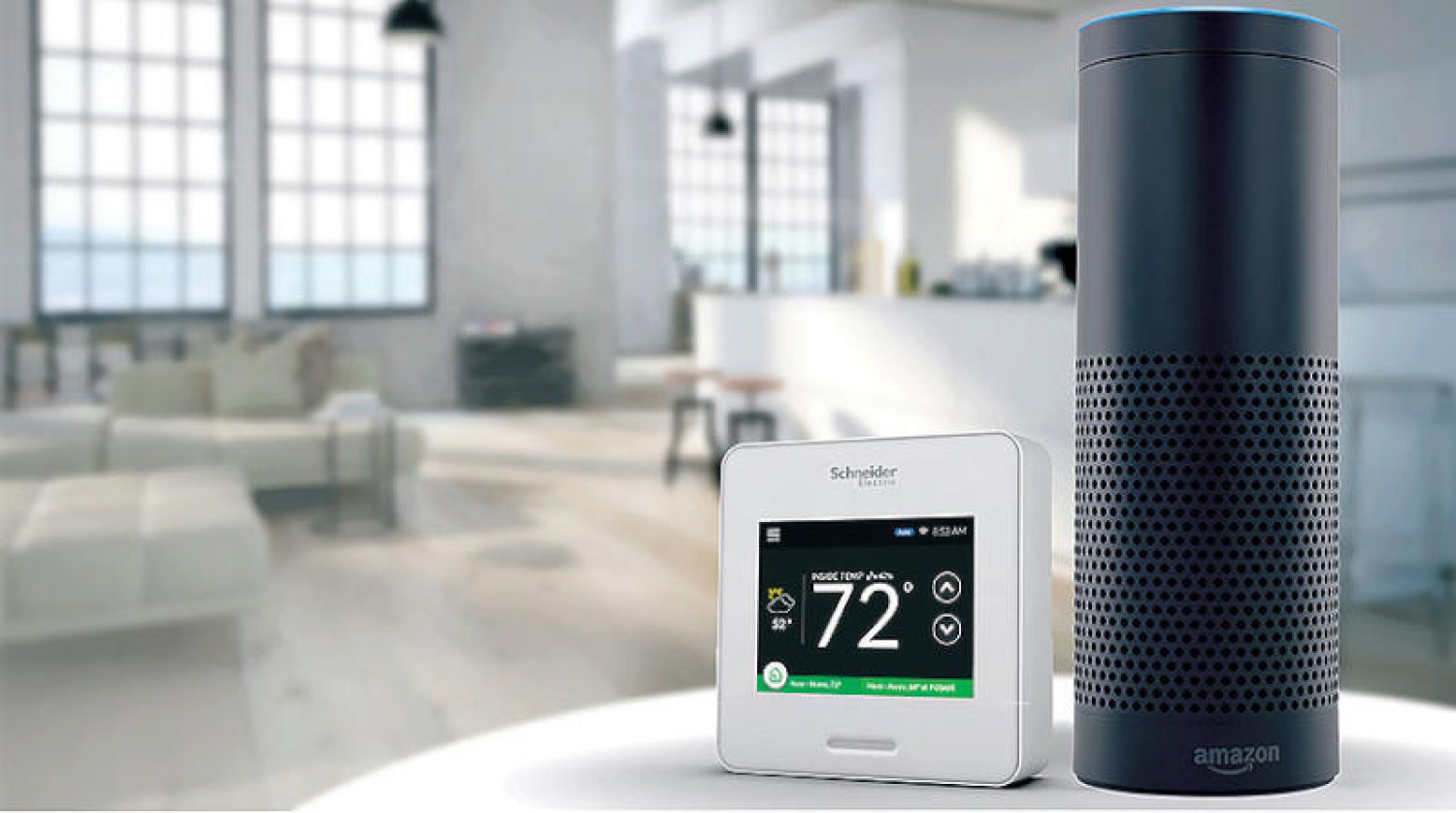
Smart homes emerge as a new choice in lifestyle with the accelerating advancements in home technologies, believed to make life easier by enabling control over home facilities through mobile phones. This usage is encompassed within various functionalities via these mobile devices.
Nowadays, everything in the home can be controlled easily, whether it's turning on lights, opening curtains, activating Wi-Fi, adjusting temperature, unlocking and locking the front door, or even igniting and extinguishing the fireplace. Since most individuals spend the majority of their time at home more than anywhere else, the thought of technology when at home is less compared to outside, except for Wi-Fi technology.
The image of homes being technology-free zones is about to change. It's time to consider the numerous devices scattered throughout the house, whether it's the television in the living room, the refrigerator in the kitchen, the air conditioner in the bedrooms, or even the water heater in the bathrooms. Individuals are now surrounded by electronics increasingly described as smart devices every day, equipped with sensors that enable them to record data and share it online. Today, there are about 31 billion devices connected to the internet, and this number is expected to rise to 75.4 billion by 2025, according to estimates by research agency "Statista."
Undoubtedly, the current prevailing question is when homes will become smarter by connecting all these devices to a single hub, enabling measurement and control of everything inside homes. The vision of a smart home exceeds the concept of comfort, as new technologies will have a profound and positive impact on health by monitoring dietary habits and surrounding environmental conditions of individuals and their general well-being. Thanks to technology, doctors will be able to know individuals' conditions in real-time, and their medical history will be at hand even before informing the doctors. Moreover, smart homes will enable healthcare workers to proactively treat diseases.
The impact of technology will also extend to the way of education when children's learning devices are connected to their teachers' devices to enhance interaction and personalized learning. There will be a greater focus on multimedia teaching, where the idea of virtual study rooms in reality will be achieved. Adults will also be able to complete their studies from where they left off through courses developed for home learning, which can be broadcasted on device screens.